Designs In Blinds & Drapes
Custom Window Treatments in Weston, MA
Schedule Your Free In-Home ConsultationBeautiful windows deserve treatments that enhance their proportions, manage sunlight and provide the right level of privacy without competing with the architecture of the home. Designs In Blinds & Drapes provides custom window treatments for homeowners throughout Weston, Massachusetts. Our team helps clients select blinds, shades, shutters, curtains, drapery and motorized window coverings designed for their individual windows, interior finishes and daily routines.
Every project begins with the room—not a predetermined product. We consider the direction of the sunlight, surrounding millwork, ceiling height, window depth, furniture placement and the way the space is used. That information helps us recommend treatments that look appropriate, operate comfortably and solve practical concerns such as glare, privacy, room darkening and difficult access.
Whether your project involves one challenging window or a coordinated plan for several rooms, our process includes personalized design guidance, product and fabric selection, professional measuring, custom fabrication and expert installation.
Schedule a free in-home design consultation to explore custom window treatments for your Weston home.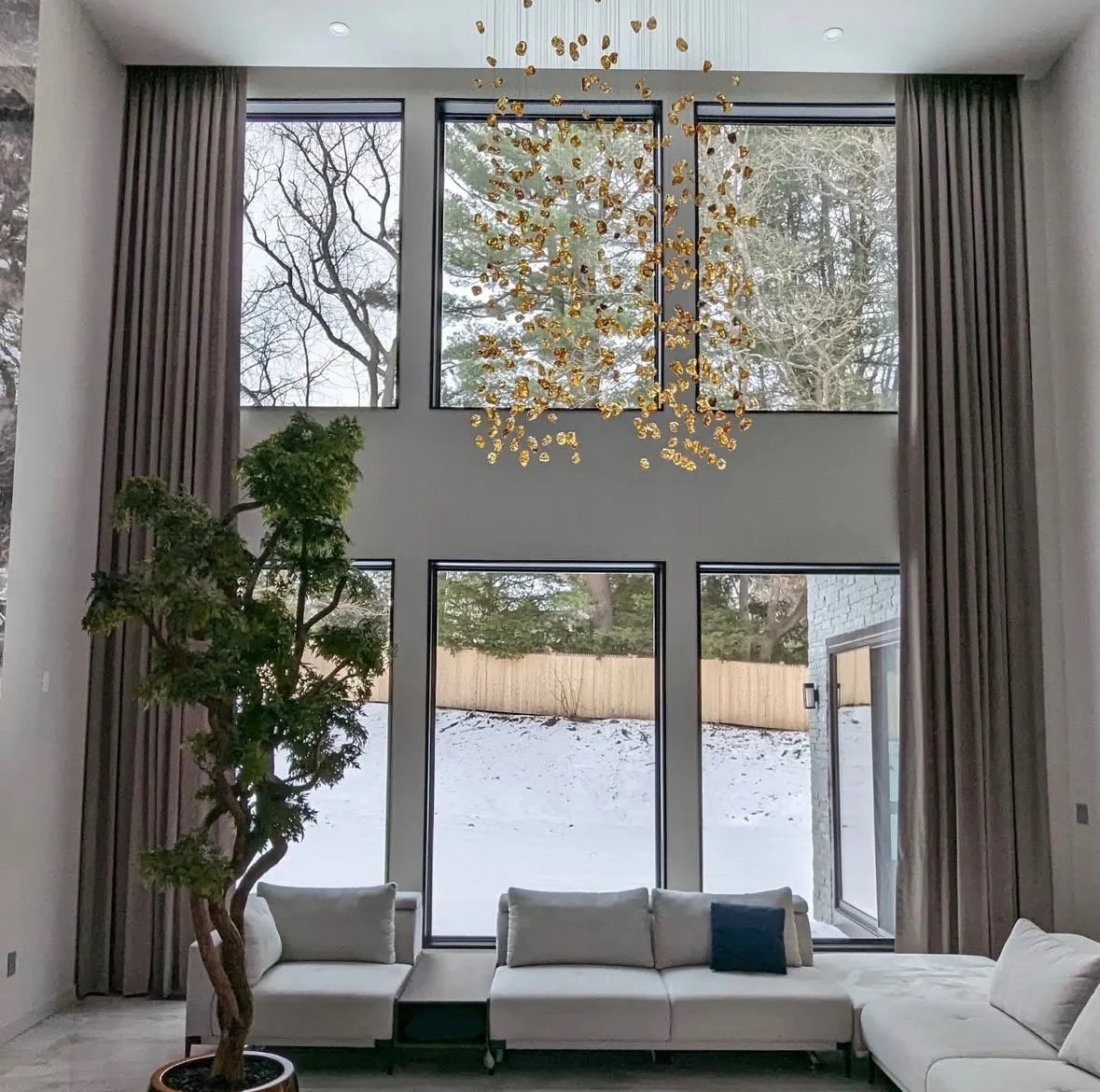
_1782827658093-CXgJn6el.webp)
Window Coverings That Respect the Architecture of Your Home
Window treatments are among the most visible functional elements in a room. Their scale, shape and material can either reinforce the architecture or distract from it. A deeply recessed window may require a different mounting strategy from a shallow opening. Substantial interior trim may be something the homeowner wants to preserve and display rather than conceal. A wall of glass may call for a quiet treatment that disappears when raised, while a formal room may benefit from drapery that adds visual height and softness.
Weston contains architecturally significant areas with homes representing a variety of periods and styles. The town's official historic resources describe Colonial, Federal, Mansard, Shingle, Queen Anne, Colonial Revival and postwar Modern buildings in areas such as Kendal Green, Silver Hill and Kendal Common. That range makes a one-size-fits-all approach especially limiting. The right custom window treatment should account for the home's character while still meeting present-day expectations for privacy, comfort and ease of operation.
Our Weston window treatment services can address:
Custom Shades for Weston Homes
Shades provide a versatile foundation for many window treatment projects. They are available in different constructions, textures and opacity levels, making it possible to tailor each shade to the room's visual and functional requirements.
_1782826442395-D7d0D_Gm.webp)
_1782827658093-Jdl7wXuU.webp)
Roller Shades
Roller shades offer simple lines and an understated profile. They can work especially well when the homeowner wants the architecture, view or furnishings to remain the primary visual focus. Material selection determines how the shade interacts with daylight. A sheer or light-filtering material may soften incoming sun while preserving brightness. A more opaque fabric can provide greater privacy, while a room-darkening material may be appropriate for bedrooms or media spaces.
Roller shades may be suitable for:
- Contemporary living rooms
- Kitchens and breakfast areas
- Home offices
- Bedrooms
- Exercise rooms
- Large windows
- Glass doors
- Rooms with minimal interior detailing
They are also frequently compatible with motorization, making them a practical option for grouped or difficult-to-reach windows.
Roman Shades
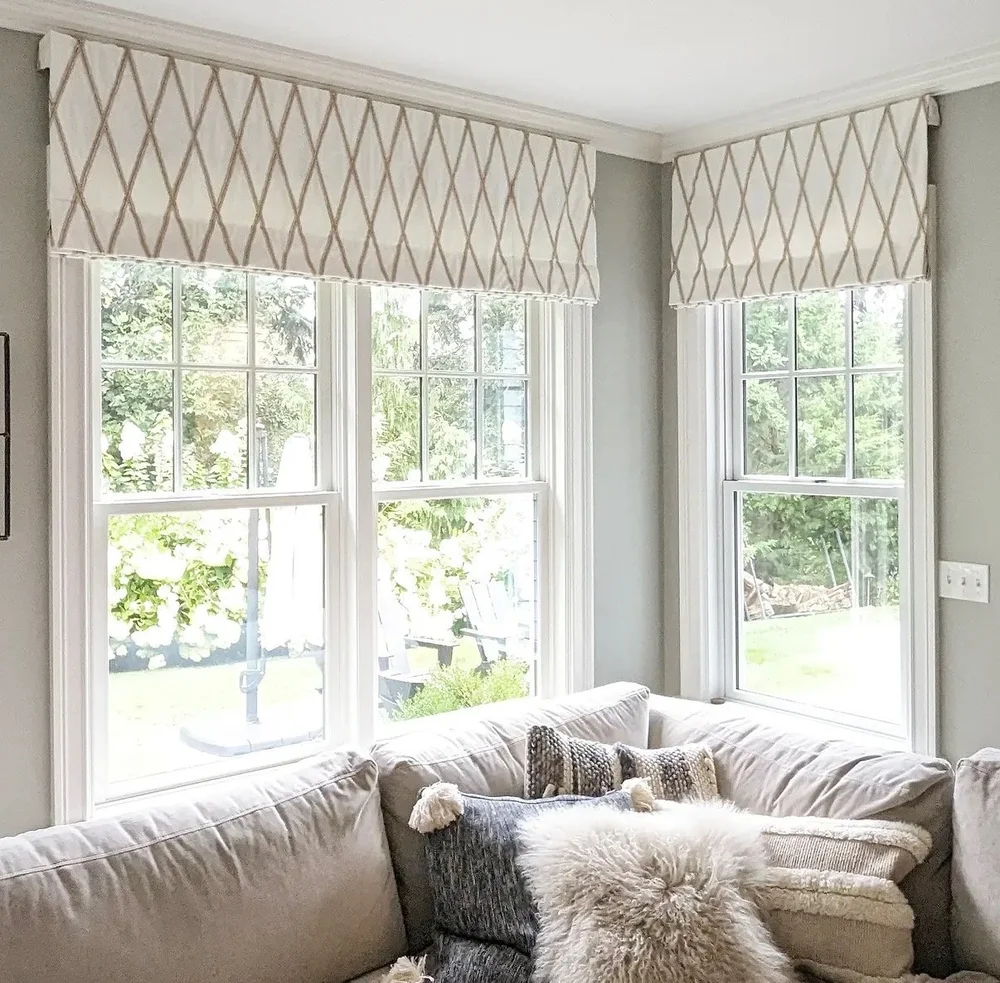
Roman shades combine the visual warmth of fabric with the vertical operation of a shade. When lowered, they introduce color or texture across the window. When raised, they gather into folds that contribute to the treatment's character. Fabric, fold style, trim and lining can significantly change the finished appearance. A structured Roman shade may complement a tailored room, while a softer construction may suit a more relaxed interior. Roman shades can function as the primary covering or be layered beneath decorative drapery panels.
Cellular Shades
Cellular shades are constructed with pockets that hold air near the window. Their compact profile and practical construction make them worth considering where comfort, privacy and restrained design are priorities. Different fabric opacities allow cellular shades to provide filtered daylight, stronger privacy or room-darkening performance. Depending on the selected product, top-down, bottom-up operation may allow homeowners to admit light from above while maintaining coverage across the lower portion of the window. This can be useful for bathrooms, bedrooms, home offices and street-facing spaces.
Woven Wood Shades
Woven wood shades introduce natural texture through materials inspired by grasses, reeds, bamboo and wood. Their variation can add depth to neutral rooms and create a visual connection to outdoor views. The openness of the weave affects both privacy and light transmission. A liner may be added when the room requires more complete coverage. Woven shades can complement informal gathering spaces, sunrooms, bedrooms and interiors that incorporate organic materials.
Solar Shade Materials
Windows with prolonged exposure to direct sunlight may create glare, heat gain or fading concerns. Solar-oriented roller materials can reduce glare and filter incoming light while maintaining varying degrees of outward visibility. The appropriate material depends on the exposure, desired view and privacy expectations. Darker and lighter materials can perform differently visually, so comparing samples inside the actual room is important.
Solar shades are often considered for:
Custom Blinds for Flexible Light Direction
Unlike a shade that primarily raises and lowers, a blind uses adjustable slats. The slats can be tilted to redirect daylight, limit visibility or preserve partial views.
Custom Wood Blinds
Wood blinds have a substantial appearance that can coordinate with flooring, cabinetry, furniture or architectural woodwork. They are available in different finishes and slat proportions, allowing the treatment to relate to the scale of the window. A carefully selected painted or stained finish can make wood blinds feel integrated with the surrounding trim.
Faux Wood Blinds
Faux wood blinds offer a similar structured appearance in a material that may be appropriate where durability, maintenance or moisture exposure is a concern. They can be considered for kitchens, bathrooms, utility rooms and active family spaces, depending on the specific environment and product. Professional measurement helps determine whether an inside mount, outside mount or alternative treatment will produce the best fit.
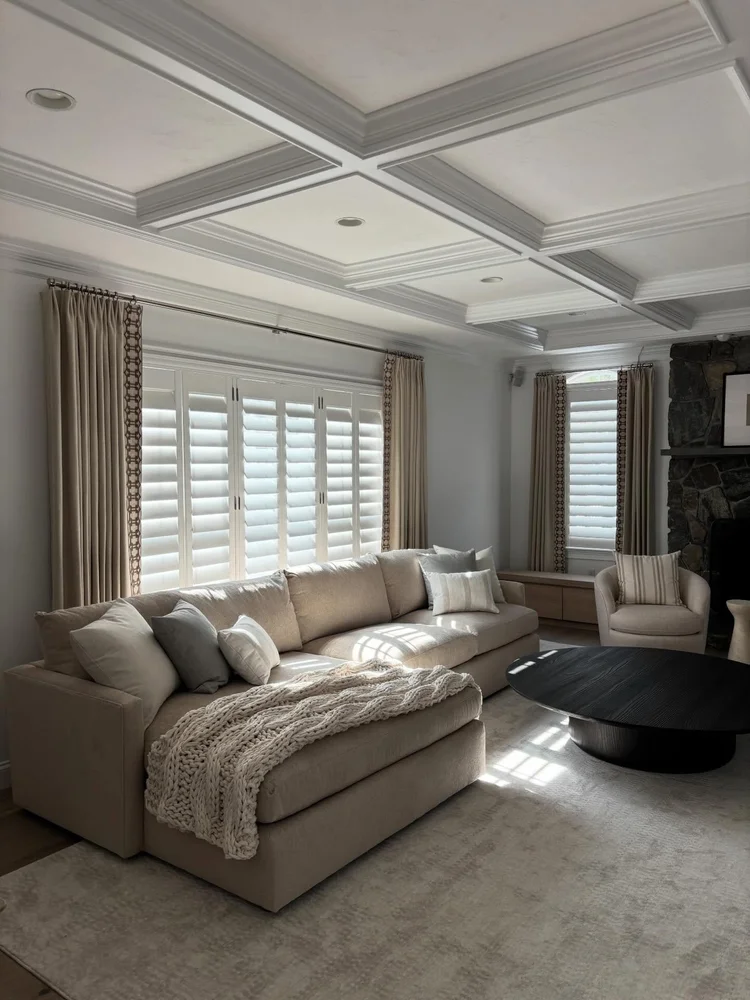
Interior Shutters for Lasting Architectural Definition
Interior shutters create a fitted, furniture-like finish at the window. Their frames and panels become part of the room's architectural composition, while adjustable louvers provide control over light and privacy.
Shutters may be an appealing choice for Weston homeowners who want:
The dimensions of the window influence louver size, frame design and panel configuration. Because shutters must fit precisely around or within the opening, accurate measuring and careful installation are particularly important.
Custom Drapery and Curtains in Weston
Custom drapery can soften architectural lines, introduce color and create a stronger sense of height and proportion. It may be designed to open and close for privacy or installed as decorative panels framing a shade, shutter or blind.
The custom process provides control over details that are difficult to achieve with ready-made panels, including:
These details influence how the drapery hangs and how it relates to the window, ceiling and surrounding furniture.
Learn more about custom drapery and curtain design._1782827658093-205g4cTc.webp)
Floor-to-Ceiling Drapery
Installing drapery closer to the ceiling can emphasize vertical scale and create a more deliberate architectural effect. This approach may be especially useful in rooms with tall ceilings, large windows or wide expanses of wall. The fabric and fullness should be chosen carefully so the treatment appears balanced rather than overwhelming.
Decorative Side Panels
Some rooms need the softness of fabric but not a fully operable curtain. Stationary side panels can frame a window while a shade or blind handles everyday light control and privacy. This layered approach allows homeowners to use a more decorative fabric without requiring it to cover the glass.
Functional Drapery
Functional drapery opens and closes across the window or door. It can provide nighttime privacy, reduce incoming light and create a more enclosed atmosphere. For wide openings, the design should account for the weight and stacking space of the fabric. The location of furniture, radiators, doors and built-ins may also affect how the track or rod is configured.
Sheer Window Treatments
Sheer fabrics can diffuse strong daylight and add softness without fully obscuring the window. They may be used independently where privacy requirements are limited or combined with a more opaque treatment. A layered system can provide softly filtered light during the day and stronger coverage at night.
_1782827658093-Cl_0b1em.webp)
Motorized Shades and Drapery Systems
Motorized window treatments offer more than novelty. For the right application, they can make large, tall or frequently adjusted coverings considerably easier to use.
Designs In Blinds & Drapes offers motorized window covering solutions that may be operated through compatible remotes, mobile devices, voice assistants, schedules or smart-home controls. Available features depend on the selected product and system.
Motorization can be particularly useful for:
Coordinated Operation
Compatible shades can sometimes be grouped so several windows move together. This is useful in rooms where individually adjusting each shade would be inconvenient. For example, a bank of shades could be lowered to reduce afternoon glare or opened together in the morning.
Scheduled Privacy and Sun Control
Automated schedules can help coverings respond at predictable times. A homeowner may choose to lower selected shades during periods of intense sunlight or close them in the evening for privacy. The best configuration should be planned around the direction of exposure, how the room is used and whether occupants want manual controls in addition to automation.
Motorized Drapery
Motorized tracks allow compatible curtains to open and close smoothly across wide windows or doors. They can be especially effective where the fabric is heavy, the opening is broad or easy daily operation is a priority. Motorization requirements should be discussed before fabrication so power, control and hardware decisions can be incorporated into the design.
Window Treatments for Large and Specialty Windows
Large windows bring daylight and outdoor views into a home, but they can also introduce practical challenges. The treatment must be properly scaled, supported and positioned to operate reliably.
Our team can evaluate applications such as:
The best solution may involve individual treatments, one continuous covering or a combination of shades and drapery.
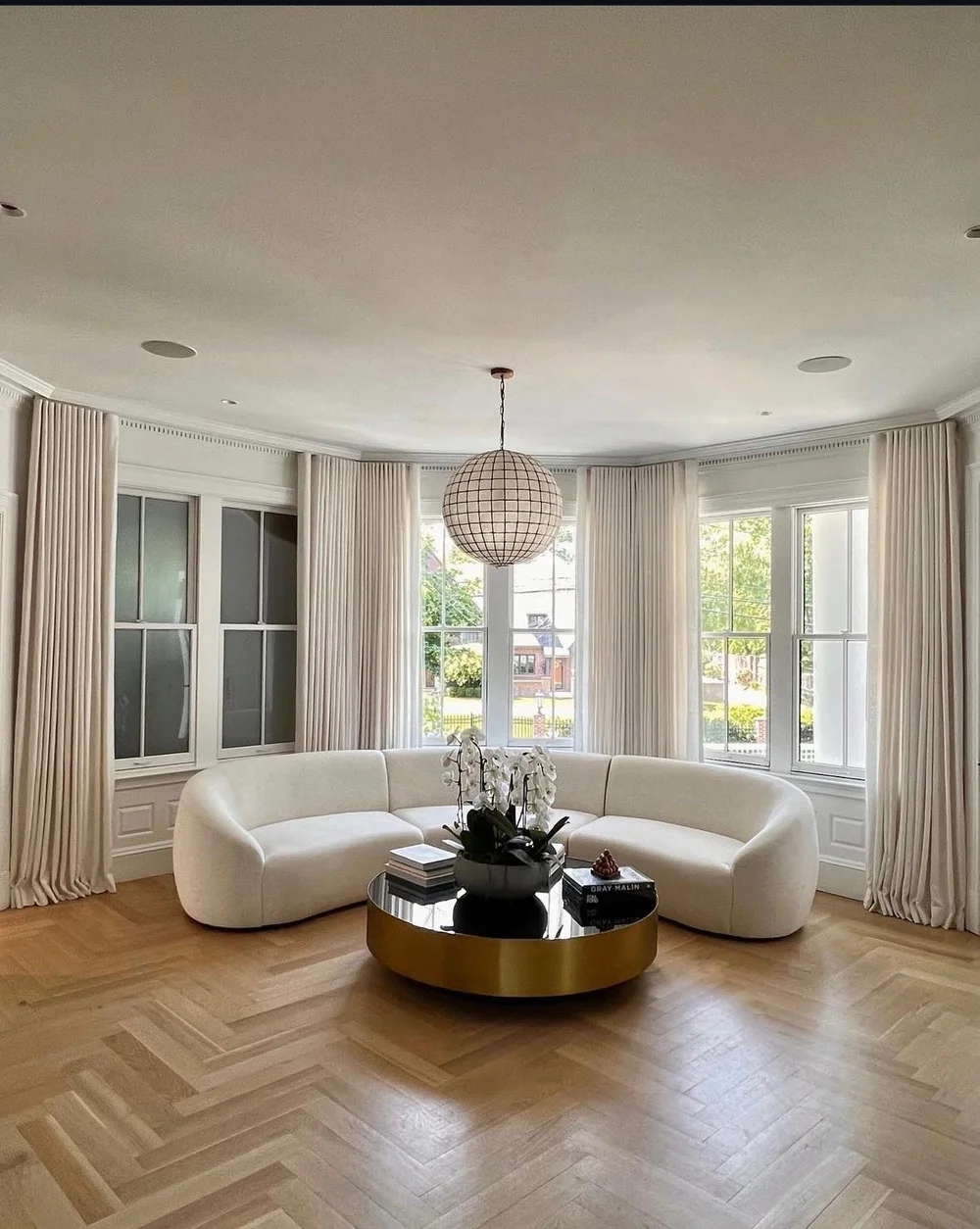
Bay and Bow Windows
Bay and bow windows require attention to angles, handles, trim and projection into the room. Separate shades may preserve individual control, while a coordinated drapery treatment may frame the entire architectural feature. There is no universal configuration. The correct approach depends on the available mounting surfaces and how the homeowner wants the window to function.
Arched Windows
Arches can be emphasized, partially covered or treated as part of the larger window assembly. Product options depend on the shape and whether the arched portion must remain operable.
Sliding and French Doors
Door treatments must provide coverage without interfering with handles or movement. Vertical products, roller shades, drapery and selected specialty treatments may be considered according to the door style and surrounding space.
Privacy Without Sacrificing Natural Light
Privacy needs can change considerably from one side of a Weston home to another. A window facing a wooded area may require little daytime coverage, while an entry-facing room or nearby property line may benefit from more control.
Custom options can balance privacy and daylight through:
A consultation inside the home helps determine sightlines from both the interior and exterior. It also allows the designer to observe how transparency changes under daytime and evening lighting.
Room-Darkening Options for Bedrooms and Media Spaces
A fabric described as room darkening does not automatically create a completely blacked-out room. Small amounts of light may remain around the edges of the treatment, particularly with an inside-mounted shade.
For stronger darkness, the design may incorporate:
The appropriate solution depends on how dark the room needs to become and whether preserving trim or maintaining a minimal profile is more important.
Coordinating Multiple Rooms Without Repeating One Treatment
A coordinated Weston window treatment plan does not mean installing the same shade or curtain in every room. Instead, visual continuity can come from a controlled set of repeated details:
A formal dining room might use custom drapery, while an adjoining kitchen uses roller shades and a nearby family room uses woven shades. The products can still feel related when the palette and design decisions are planned together.
Multi-room projects can also be completed in phases. Establishing a broader plan at the beginning helps ensure that later selections coordinate with treatments already installed.
Custom Upholstery and Soft Furnishings
Window treatment fabrics can serve as a starting point for other decorative elements in a room. A drapery material might be echoed in a pillow, bench cushion or accent chair, while a complementary fabric can create contrast without feeling disconnected.
The company's custom upholstery and furniture services may include furniture reupholstery, dining chairs, custom cushions, accent pieces and designer fabric guidance.
Upholstery projects may involve:
Material selection should consider how frequently the piece will be used, whether children or pets are present, cleaning requirements and the amount of sunlight reaching the furniture.
Window Treatment Planning by Room
Great Rooms and Large Living Areas
Large gathering spaces often contain several windows with different orientations. A coordinated system can manage glare and privacy without interrupting the room's visual rhythm. Motorized roller shades, woven shades, Roman shades and layered drapery are among the options that may be considered.
Primary Bedrooms
Primary bedroom treatments often need to support privacy, darkness and convenient daily operation. Room-darkening shades may be paired with custom drapery for fuller coverage and a more complete visual effect. Motorized controls can simplify the operation of several windows.
Libraries and Home Offices
Offices and libraries benefit from controlled daylight. Excessive brightness can create computer glare, while fully closing the room may make it less comfortable to use. Adjustable blinds or solar-oriented shades can help maintain useful light while reducing direct exposure.
Dining Rooms
Dining rooms provide an opportunity to introduce richer fabric, decorative hardware or a structured Roman shade. The treatment can contribute to the atmosphere even when the room is not in use.
Kitchens
Kitchen window coverings should be selected with nearby sinks, cooking surfaces, moisture and frequent handling in mind. Roller shades, faux wood blinds and appropriate Roman shade materials may offer a useful combination of performance and style.
Guest Rooms
Guest rooms benefit from intuitive controls and flexible privacy. A straightforward blind or shade can be supplemented with decorative panels to make the space feel more finished.
Media Rooms
Media rooms may require more substantial control over incoming light. Room-darkening shades, lined drapery or layered systems can reduce reflections and create a more comfortable viewing environment.
Our Custom Window Treatment Process
In-Home Design Consultation
A design professional meets with you in your Weston home to discuss priorities, room use and design preferences.
Window and Room Evaluation
The designer evaluates the windows, trim, mounting depth, sunlight, furniture placement and nearby architectural elements.
Product and Material Selection
You compare relevant samples in the actual room. Options may include fabrics, shade materials, finishes, opacity levels, hardware and operating systems.
Professional Measurement
Once the design direction is established, precise measurements are taken for custom fabrication.
Custom Ordering and Fabrication
The selected products are made according to the approved dimensions and specifications.
Expert Installation
The finished treatments are installed, aligned and checked for proper operation.
You can view examples of drapery, shades, shutters and upholstery in the company's project gallery.
Why Choose Professionally Designed Window Treatments?
Recommendations Based on the Actual Space
Samples can be viewed beside the home's paint colors, flooring, furnishings and natural light rather than evaluated in isolation.
A Fit Designed for the Window
Custom measurements account for the actual width, height, depth and mounting conditions of the opening.
Better Control Over Function
The treatment can be selected around the desired level of privacy, filtration, darkness and ease of use.
Access to Coordinated Materials
Fabrics, shade materials, trims and hardware can be selected as part of one design plan.
Professional Installation
Proper mounting helps the treatment appear level, operate smoothly and maintain appropriate clearances.
Support for Complex Projects
Large windows, specialty openings, motorization and multi-room installations often require coordination that is difficult to manage through an off-the-shelf purchase.
Serving Weston, Massachusetts
Designs In Blinds & Drapes serves homeowners throughout Weston, including areas near Weston Center, Kendal Green, Kendal Common, Silver Hill and Hastings. Kendal Green and Silver Hill are recognized historic areas, while Kendal Common is noted by the Town of Weston for its collection of postwar Modern-style houses. These local architectural differences reinforce the value of selecting treatments according to the individual home rather than applying one generic design across every project.
Homeowners may begin with an in-home appointment or visit the company's nearby Waltham showroom. See the showroom information before planning your visit.
Frequently Asked Questions
Contact Us
Contact Designs In Blinds & Drapes
Bring greater privacy, comfort and design continuity to your Weston home with window treatments created for your individual rooms. Schedule a complimentary in-home design consultation to compare custom shades, blinds, shutters, drapery, motorization and upholstery options.
Designs In Blinds & Drapes
643 Moody Street, Waltham, MA 02453
Phone: (781) 899-1811
Email: info@designsinblinds.com
Learn more about the company on the About Us page, browse the project gallery, or read feedback on the client reviews page.
Contact Designs In Blinds & Drapes to begin creating custom window treatments that complement the architecture, light and lifestyle of your Weston, MA, home.
Schedule Your Free In-Home Design Consultation Online